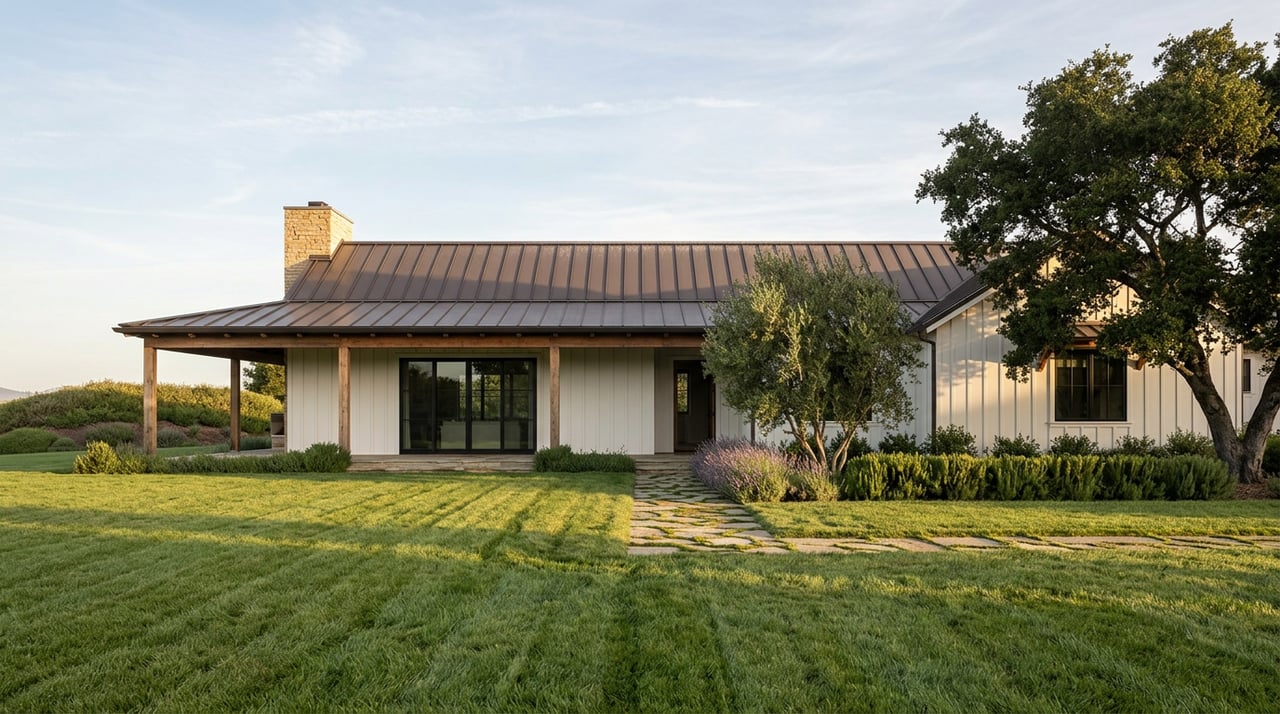
In September 2023, a family working through the approval process for a new house in Rolling Hills sat through three separate public hearings, in March, July, and August, before the Planning Commission signed off on a 7,290-square-foot residence with a basement of the same size, a pool, a trellis, and a retaining wall. Then, in October, the City Council pulled the project under its own jurisdiction anyway. In November, council members drove out to the site for a field visit before the matter was finally settled.
That timeline is public record, filed with the City of Rolling Hills' own planning department. It is also the clearest evidence available that building or renovating inside this gated city on the Peninsula does not run on one clock. It runs on two, and they rarely move together.
What the City Actually Approved
The case above involved the City of Rolling Hills itself, the municipal government that handles planning, zoning, grading permits, and public safety within the city limits. Its own development FAQ spells out when a project needs this level of discretionary review: any grading of three feet or more covering over 2,000 square feet of surface area, any new building or structure other than a barn or stable built without grading, and any expansion or alteration to an existing residence that requires a grading permit or increases the structure's size.
That threshold catches more than new construction. An addition, a raised patio, or a regraded pad for a pool can all trigger the same discretionary path the 2023 project went through, complete with public hearings and the possibility that the City Council decides to take a closer look on its own. Smaller projects, a pool under 800 square feet, a greenhouse, a gazebo, still require a Conditional Use Permit, which means a public hearing even for something that would be a weekend project anywhere else on the Peninsula.
The Second Approval Nobody Puts on the Timeline
Everything above sits under the city's authority. It has nothing to do with the Rolling Hills Community Association, the private entity that has governed the community's roads, gates, and architectural character since 1936, two decades before Rolling Hills incorporated as its own city in 1957.
The RHCA runs a separate Architectural Committee, and its own governing language is direct: new residences and additions "shall conform as closely as possible to the concept of the traditional or contemporary Rolling Hills California ranch-style house." That is not a suggestion available on request. It is the standard the committee reviews.
Here is the split in practice:
| Governs | City of Rolling Hills | Rolling Hills Community Association |
|---|---|---|
| Authority over | Zoning, grading permits, building permits, public safety, code enforcement | Roads, gates, architectural review |
| Triggers review | Grading, new structures, additions that expand square footage | New residences and additions |
| Public process | Planning Commission and City Council hearings for discretionary projects | Architectural Committee review |
| Founded | Incorporated as a city in 1957 | Established in 1936 |
Neither body defers to the other. A project can clear the city's grading permit and still stall at the RHCA's architectural desk, or the reverse. The 2023 case moved through the city's side of that ledger. Any comparable project also has to clear the RHCA's side, on its own schedule, using its own criteria.
What This Costs Before You Even Get to Paint
The dual review is not the only place where Rolling Hills runs differently from the rest of the Peninsula, and the other differences tend to surface during due diligence rather than at the open house.
The city's own housing element states there is no sanitary sewer system citywide except for the school site and thirteen residences tied into an adjacent system. Nearly every home relies on a septic tank and seepage pit. For a buyer evaluating an older property, that means a septic inspection belongs on the same checklist as the roof and the foundation, and any renovation that adds bedrooms or bathrooms may need to account for what the existing system can handle.
The entire city also sits in a designated Very High Fire Hazard Severity Zone. Steep slopes and past landslide activity are also noted in the city's planning materials. Grading is subject to discretionary review. None of this is presented as a warning sign. It is the reason the ranch-style, low-density character that draws buyers here in the first place has held for close to ninety years. But it does mean the cost of a renovation includes review time and compliant materials that a similar project in a neighboring city would not need to budget for.
On top of that, the association's assessment is a cost worth lining up early against property taxes and insurance when comparing Rolling Hills to other Peninsula options.
If You're Selling an Inherited Home Here
This is where the timeline question stops being theoretical for a specific kind of seller: the adult child or trustee handling a parent's estate, deciding whether to do a light cosmetic refresh before listing or sell the property as it stands.
The instinct to swap out an old fence, patch the roof, or update exterior lighting before photos go live makes sense almost everywhere.
The RHCA's own guidance for anyone considering a purchase here is to visit the association office before finalizing a decision and review the property's file directly, which surfaces easement conditions, past architectural approvals, and any outstanding permit history before it becomes a surprise at inspection. That same file is worth pulling before a listing goes live too. A trustee who lists a home with an unresolved architectural violation or an unrecorded improvement is passing that problem to the buyer's escrow, where it tends to resurface at the worst possible moment in a transaction.
Easements are the other item worth checking early.
A Few Questions Worth Settling Early
Does every exterior change need RHCA approval, or just major construction? The association's review reaches fencing, roofing, and exterior lighting, not only new construction or additions. A straightforward fence replacement still needs a survey and a permit from the RHCA before work begins.
If a house already has city approval for an addition, is RHCA approval automatic? No. The two bodies review independently. City approval covers zoning and grading. RHCA approval covers architectural conformity to the ranch-style standard. A project can clear one and still need work to satisfy the other.
Is septic status something a buyer can just ask about at the open house? It is worth confirming through inspection rather than conversation. With most of the city on individual septic systems and only the school site and thirteen residences connected to sewer, a septic evaluation belongs in the same due diligence phase as a roof or foundation inspection, particularly for any purchase where an addition is part of the plan.
Rolling Hills rewards patience more than almost anywhere else on the Peninsula, and the properties that come with the most upside are often the ones that have sat with an unresolved permit or an outdated fence line simply because nobody worked through both approval paths at once. Whether you are weighing a purchase here or preparing to list a home that has been in the family for decades, that groundwork is worth doing before the sign goes up, not after.
Patrice Meepos works with families across the Peninsula managing exactly these transitions, from trustee sales to properties that need a clear-eyed read on what a renovation will actually require before a decision gets made. Work With Patrice to get that read early.
This article is general information, not legal, tax or financial advice. Consult a qualified professional about your situation.