What does Palm Desert living actually feel like once you look past the postcards? If you are considering a primary home, second home, or future downsizing move here, you want more than a list of golf courses. You want to know how the days flow, what the lifestyle really includes, and what practical details matter before you buy. Let’s take a closer look.
A lifestyle shaped by sun and season
Palm Desert sits in the center of the Coachella Valley and is described by the city as the region’s cultural and retail center. The city’s community profile lists a 2024 population of 52,779 and notes that Palm Desert also has more than 30,000 seasonal residents. That seasonal pattern helps explain why the city can feel relaxed at some times of year and especially active in others.
The climate plays a major role in daily life. According to Palm Desert’s community economic profile, the city has 350 days of sunshine per year, a mean temperature of 73.1°F, and average annual rainfall of 3.38 inches. In practical terms, that means many residents plan outdoor time early in the morning or after sunset during the warmer months.
If you are relocating from Los Angeles or another denser market, this rhythm can feel like a meaningful lifestyle shift. Palm Desert is about 15 miles east of Palm Springs and roughly 122 miles east of Los Angeles, so it offers a different pace while still staying connected to Southern California. For many buyers, that balance is a big part of the appeal.
Golf is part of daily life
Golf in Palm Desert is not just a vacation activity. It is woven into the city’s identity and everyday routine, especially in resort-oriented areas where fairways, clubhouses, and golf-cart access shape how people move through the day.
A central example is Desert Willow Golf Resort. The city developed and owns the resort, which opened in 1997 and is operated through KemperSports. The clubhouse includes a pro shop and full-service restaurant, and residents can apply for a resident golf card for reduced-rate access.
One detail that says a lot about local culture is the city’s golf-cart program. Palm Desert allows residents to register golf carts for street use, which shows that golf-cart mobility is not just a novelty here. In some parts of daily life, it is part of how people comfortably get around.
Resort living goes beyond the course
While golf is a major draw, Palm Desert’s resort lifestyle is broader than tee times and club memberships. The city supports an active outdoor pattern with public amenities that appeal to full-time residents, seasonal owners, and weekend visitors alike.
According to the city’s parks and recreation information, Palm Desert maintains more than 200 acres of parkland, 17 parks, two community centers, the Palm Desert Aquatic Center, and more than 25 miles of multi-purpose trails. Pickleball is available at multiple city parks, including Civic Center Park and Freedom Park. The city also offers community gardens open to residents and business owners.
That matters if you are trying to picture everyday livability. Even if you love the idea of resort amenities, many buyers also want convenient options for walking, fitness, and outdoor recreation outside a private club setting. Palm Desert offers both.
Social life centers on El Paseo
A big part of the Palm Desert experience happens off the course. The city’s social and lifestyle scene is closely tied to dining, shopping, art, and events, with El Paseo serving as one of the best-known gathering spots.
Palm Desert’s tourism site describes El Paseo as an eight-block district with more than 200 shops, restaurants, and art galleries. Courtesy carts operate seven days a week from October to May, which adds to the area’s easy, resort-like feel during the busier season.
Outdoor dining also fits naturally into local habits. Palm Desert promotes patio dining and expanded outdoor seating in several districts, which works well in a place where many people prefer early evening plans or cooler-season lunches outside. If you are looking for a lifestyle that mixes activity with convenience and social energy, this is part of what makes Palm Desert stand out.
Arts and events add depth
Palm Desert is often associated with golf, but the city offers more cultural variety than many first-time buyers expect. That can be important if you want a home base that feels engaging year-round, not just recreational.
The city’s public art program includes 79 permanent and 71 developer artworks. Local attractions and events highlighted by the city and tourism sources include McCallum Theatre, the Living Desert Zoo & Botanical Garden, Fashion Week El Paseo, the Golf Cart Parade, and a summer concert series.
Taken together, those amenities give Palm Desert a layered identity. It reads less like a single-purpose golf market and more like a resort city with a strong calendar of dining, arts, and community events.
Homes reflect indoor-outdoor design
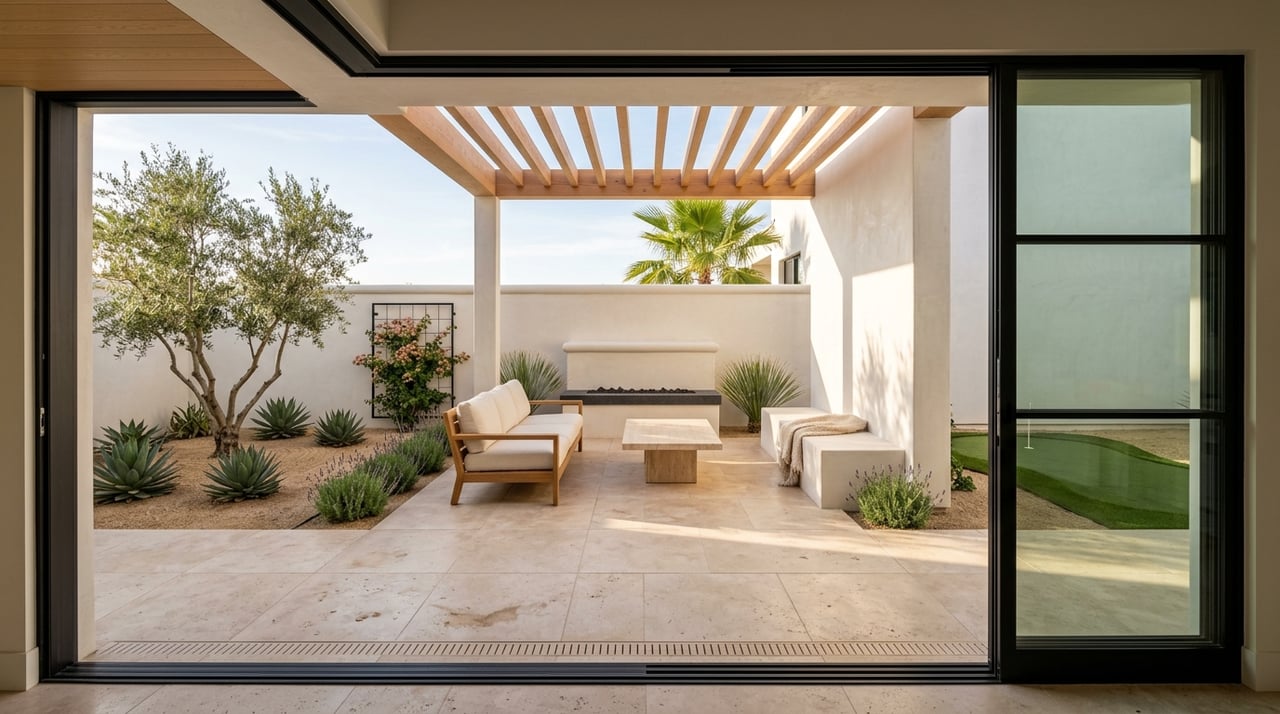
The housing style in Palm Desert helps define the lifestyle just as much as the amenities do. Many buyers are drawn to homes here because the architecture is designed to work with the climate, mountain views, and outdoor living pattern.
A city planning document describes Desert Mid-Century Modern as a style that blurs indoor and outdoor living through open floor plans, generous glazing, breezeways, shading, and outdoor living space. The same document says Desert Modern more broadly combines contemporary and mid-century influences with clean lines and natural materials.
In real life, that often means homes with patios, pool decks, natural light, and a strong connection to the landscape. The city’s film-permit page even highlights settings like Desert Willow Golf Resort and Marriott’s Desert Springs Resort & Spa as especially photogenic backdrops, which reinforces how closely Palm Desert’s built environment and scenery work together.
What buyers should think about
Lifestyle is only one part of the decision. If you are thinking seriously about buying in Palm Desert, it helps to understand the practical side as well, especially if the property may serve as a second home or part-time residence.
Palm Desert is a managed, code-conscious city. The city’s code compliance information explains that staff works to keep neighborhoods aligned with municipal standards, handles golf-cart renewals, and responds to short-term-rental complaints. That can be reassuring for buyers who value a polished and orderly environment.
Fire-zone designations are another important detail. The city notes on its fire hazard severity zones page that some properties may fall into moderate, high, or very high fire-hazard severity zones, which can affect building requirements, insurance, and defensible-space obligations. This is worth checking early if you are comparing homes in different settings.
If you are considering rental use, do not assume short-term renting is automatic. Palm Desert requires an active permit for short-term rentals, and local occupancy taxes apply to stays of 27 consecutive nights or less, as outlined on the city’s short-term rental and TOT page. For second-home buyers, that is one of the first due-diligence items to review.
Why Palm Desert appeals to so many buyers
Palm Desert works for a wide range of goals because the lifestyle is flexible. Some buyers are looking for a lock-and-leave second home with access to recreation and dining. Others want a full-time home with outdoor space, design appeal, and a calmer pace than coastal or urban markets.
It can also be a thoughtful fit if you are planning a future downsizing move. The area’s resort setting, golf-cart culture, public amenities, and strong indoor-outdoor living design often appeal to buyers who want comfort, ease, and a more lifestyle-driven home base.
The key is matching your home choice to how you want to live. In Palm Desert, that means looking not only at square footage and views, but also at seasonal rhythm, recreation patterns, and local regulations that may shape your day-to-day experience.
If you are exploring Palm Desert and want clear, thoughtful guidance on how different neighborhoods and resort areas may fit your goals, Patrice Meepos can help you navigate the decision with a calm, strategic approach.
FAQs
What is the overall lifestyle like in Palm Desert?
- Palm Desert offers an outdoor-oriented, seasonally social lifestyle centered around sunshine, golf, public recreation, dining, shopping, and arts programming.
Are golf carts really used in daily life in Palm Desert?
- Yes. The city allows registered golf carts on public streets under a formal program, which reflects how golf-cart mobility is part of local culture.
Is Palm Desert only for golfers?
- No. In addition to golf, the city offers parks, pickleball, trails, community centers, the aquatic center, shopping, dining, public art, theater, and seasonal events.
What should second-home buyers know about Palm Desert?
- Second-home buyers should review local short-term rental permit rules, occupancy tax requirements for stays of 27 nights or less, and whether a property falls within a fire-hazard severity zone.
What kind of home design is common in Palm Desert?
- Many homes reflect Desert Modern or Desert Mid-Century Modern influences, with features that support indoor-outdoor living, natural light, shading, and open layouts.